

More Than Just an Athlete
- Jeremiah Hernandez

- Apr 7
- 3 min read
Last month, on February 24th, tragic news broke out that Minnesota Vikings wide receiver Rondale
Moore was pronounced dead on February 21st in New Albany, Indiana. Local police chief, Todd Baily,
shared that Moore was found with what they believe was an apparent self-inflicted gunshot wound.
Moore grew up in New Albany, where he would shine bright as a standout athlete at New Albany High School
School before transferring to Trinity High School after his remarkable sophomore season. He would take
his academic and athletic talents to Purdue University, where he would inevitably continue to be a
standout player. In 2018, as only a freshman, he would lead the Big 10 in receptions, receiving yards, and
receiving touchdowns. Even though his next two seasons would be cut short due to injury, Moore would
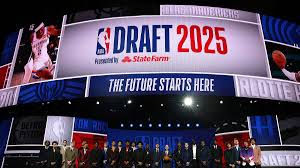
declare for the draft and be selected by the Arizona Cardinals with the 49th overall pick in the second
round of the 2021 NFL Draft.
In his 3-year tenure with the Cardinals, Moore would provide great versatility with elite speed that would
stretch the field for opposing defenses, allowing for big play compatibility on any snap. After Arizona, his
next 2 seasons would be missed in 2024 with the Atlanta Falcons and 2025 with the Minnesota Vikings
after suffering season-ending injuries in the preseason.
While Rondale Moore was widely recognized as a talented athlete and wide receiver, his story and
purpose go deeper than what catches the eye on televised NFL Sundays.
In a recent article released by The Players' Tribune, we learn more about the life of Rondale Moore
through the words of his former teammate, A.J. Green. The two quickly formed the veteran and the rookie
“NFL circle of life” relationship, where Green treated Moore as if he were his third and oldest child.
Earning him the nickname “Rondale Green.
”When describing their father-son relationship, Green shared,
“Man, I swear….. sometimes he really did feel like my son. I hope he knew I really did love him that way.”
When Green was doing his due diligence on the rookie, he was skeptical about Moore’s
undersized 5’7 and short arm frame. After turning on the tape, he quickly found out he was legit.
Green even shared, “Then after I watched his highlights, I watched his workouts — he’s
benching 300 pounds, he’s squatting 600 pounds. It’s crazy. And then finally, I checked out his
bio. It’s saying he’s Academic All-Big Ten, and took all these extra hours of class so he could
graduate in two and a half years. And I’m just sitting there like…. Who IS this dude???”
Green noticed that Moore came into the league much more mature than most rookies he’s seen;
however, he was also very hard on himself when he made a mistake. It was like he wished
“Rondale could be more like those other rookies. You wished he could find that place in his head
where it’s a little more carefree.”Jeremiah Hernandez
After hearing about Moore’s journey growing up, it began to make sense how he got stuck within
that mindset. Green said, “He started telling me about where he came from: New Albany, a small
town in Indiana, as the youngest of four kids to a single mom. I learned about how he’d been an
underdog from day one … how he was born five weeks too early, and had to be in intensive care
out the gate, fighting for his life.”
In today’s world, it feels like we are lost in the product-driven side of the sports business. The focus has
shifted almost entirely to statistics, performance, and profit, causing many people to overlook the fact that
athletes are human beings first. When proper mental health resources and support systems are not
available, we place athletes in battles against mental struggles that they are often left to face alone. While
friends and family can provide love and encouragement, that support cannot always replace professional
help. As Green explained,
“While those people can give you love and support… what they can’t give you
is professional help, and what they can’t do is equip you with the tools so that, if you ever do have a
mental health crisis, or even just a really bad day, you know how to handle it—and you don’t go and do
something you can never undo.”
Rondale Moore was only 25 years old when he passed. Until we strive to see athletes as people before
performers, stories like this will continue to remind us of the cost of forgetting their humanity.
If you or someone you know is struggling and fighting a battle alone, help is always available through
Call or text 988.
Sources:
The Sporting News
The Player's Tribune


Comments