

How Philosophy Holds a Contender Back
- Austin Toubassi

- Apr 7
- 6 min read
Over the last six seasons, the Buffalo Bills have been an AFC juggernaut and highly
picked Super Bowl favorite that has repeatedly come up short in heartbreaking fashion, most
notably against the Kansas City Chiefs. Despite their postseason results, it’s hard not to have them as
an elite contender. Their QB, Josh Allen, has consistently been one of the top superstars in the
league and just came off a 2024 MVP season, and is one of the biggest reasons for their success
today.
Recently, after once again coming up short in the playoffs against the Denver Broncos in an
OT loss, ownership responded by firing longtime head coach Sean McDermott while promoting
Brandon Beane. While McDermott’s terrible defensive playoff coaching is a valid reason for
why they’ve come up short, it ignores an underlying issue: their lack of a true franchise WR1
since Stefon Diggs’ departure. This hole in their roster makes Josh Allen’s play more impressive
, as he’s been elevating that roster for years.
Simply put, the value of a true receiving threat can’t be overlooked. The ability to stretch
the field, blow by defenders with ease, win on the outside against press coverage and contested
catches, and have another level of chemistry with the QB to connect on passes the defense can’t
handle. No matter how elite a quarterback is, they can’t compensate for an offense that’s missing
someone with these traits, and it’s the difference maker in clutch time situations. While receivers
can be very complementary to quarterback play and development, similar to how Stefon Diggs
was to Josh Allen’s early career, the shortcomings can be equally costly, and the Bills have
plenty of examples where receivers came up short. In the 2024 playoffs in the divisional round vs
the Chiefs, multiple receivers dropped crucial deep passes that changed the momentum of the
game, including the most infamous drop with 8:17 left, where Diggs couldn’t catch a 60-yard deep pass that went right through his hands. Diggs, whose production dropped off during the
back half of the season, finished with just 3 catches for 21 yards in that game. While Diggs was
instrumental in the Bills' success in prior years, his lack of production hurt the team in the second
half of that season, and Shakir, who isn’t a true WR1 option, outproduced him on a ⅓ of the
targets throughout the back half of the season. Additionally, in the 2025 postseason AFC
championship game vs the Chiefs, young tight end Dalton Kincaid couldn’t come down with a
difficult pass from Allen under pressure with the game on the line. Most recently, in 2026 against
the Broncos in the divisional round, the deep pass to Brandin Cooks in overtime was
controversially ruled an interception, allowing the Broncos to get the ball with full control to win
the game. Whether it was a catch or an interception, Cooks lost full control of the ball, and an elite
receiver in his prime would’ve been able to come down with a catch like that. Is it necessarily the receiver’s fault? No. Cooks was a receiver way past his prime, while Kincaid is a young tight
end with upside but has his inconsistencies. Diggs’ production in the 2023/24 season dropped
off. Since the Bengals week 9 matchup, he has only had 2 games with over 70 yards and was not the
dominant receiving threat in the postseason at all. The Bills lacked a true difference maker at
receiver in all 3 of these situations. In these outcomes, were there plenty of other mistakes that
you could blame the losses on? Absolutely. But each game had the common outcome of still
having a huge chance to win the game, and a wide receiver not being able to come down with the
crucial catch when it mattered the most. It’s incredibly hard to have a perfect game, even in the
playoffs, but as a team, you should always give yourself every possible advantage that can
increase your odds of winning, even if it’s ugly. In moments like these, an elite weapon isn’t a
luxury; it’s the difference between winning and going home.
And that’s my wider problem with the Bills, specifically their front office and Brandon
Beane, they’ve been treating the receiver position like a luxury. The overall philosophy is to
build everywhere else and rely on your superstar QB to compensate for the lack of talent on the
offensive side of the ball. While this approach is more than good enough for regular season
success, when it comes to facing the best, especially elite defenses, good enough simply isn’t
good enough. With that being said, Beane is not a terrible general manager at all. He has done a
nice job on the O-Line and made good decisions on who to extend vs cut.
The bigger issue is the team had multiple opportunities in the draft to get their receiver of
the future, showing it’s a roster construction issue rather than a player issue. Yes it’s easy in
hindsight to criticize a GM for passing up on one guy vs the other. After all, all player moves that
sports teams do when it comes to contracts, draft picks, etc.. are all investments that have some
risk of not working out. All GM’s make mistakes. However, when a GM repeatedly misses out
on opportunities to address the same issue that’s prevalent year after year, it becomes a pattern
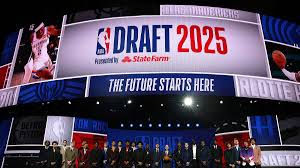
over bad luck. In the 2025 draft, the Bills had the opportunity to draft Luther Burden, a highly
coveted prospect, without having to trade or anything. Instead, they drafted Maxwell Hairston.
Hairston isn’t a bad player at all; it’s the idea they ignored targeting a position of need, and a
potential WR1 right in front of them. If they focused on drafting an elite receiving threat, you
would avoid the idea of having to trade for one, like they did with Diggs, and most recently, DJ Moore.
Furthermore, it avoids that $30-40 million a year contract extension you would have to pay for at
least 3-4 years, which especially helps a team like the Bills, who have been near the cap limit in
recent years. They also showed their willingness to trade up in rounds, as they traded up in that round
2nd round to draft DT TJ Sanders, and in the 3rd to get edge rusher, Landon Jackson. In that 3rd
round, there were receiver prospects like Issac TeSlaa and Kyle Williams, they could’ve pursued
instead. Whether they seemed like raw prospects or not, the point is that the opportunity was there
multiple times. Additionally, in the 2024 draft, the team traded with the Chiefs and selected Keon
Coleman out of FSU. At that pick, they also had a choice with Adonai Mitchell from Texas, and
Ladd McConkey from Georgia. While Coleman was a receiver, he wasn’t great versus man coverage or playing on the outside. There’s nothing wrong with Coleman's style; it’s the fact
Beane insisted he was something Coleman wasn’t, a true X receiver who was versatile.
Meanwhile, he insisted the team didn’t need that type of player. Even back in the 2023 draft, they
passed on Michael Wilson out of Stanford in favor of a defensive player, and Puka Nacua, while
opting for receiver Justin Shorter instead. However, everyone passed on Puka, so that isn’t just a
decision you can solely blame on the Bills. These examples show that the Bills and Beene
deliberately chose to go in a different direction multiple times and avoided a major issue that’s
been plaguing the team. It reinforces the philosophy issue I brought up earlier, build everywhere
else, and rely on your superstar QB to compensate for the lack of receiving talent. You need talent
and scheme on both sides of the ball to win a Super Bowl, and because the Bills haven’t invested
in getting a young guy at a key position, they aren’t a true Super Bowl team unless this mindset
changes.
Finally addressing some recent news, the team traded for Bears wide receiver DJ Moore
to address this concern. There are arguments about his production slowing down the last two
seasons with Caleb, whether that system and bad o-line leaves room for debate. He’s also a
veteran, like the other wide receivers they’ve brought in as short-term fixes for the receiving
core, though he’s younger than many of those previous additions. It’s definitely a better effort
than the front office has made in the past at addressing the issue. While letting Sean McDermott
go shows the organization’s effort to make meaningful change in order to get over the hump,
Brandon Beene’s drafting and roster construction have been overlooked, and leaves a lot to be
desired. In his tenure, the team has only drafted 2 Pro Bowlers outside of their superstar QB,
running back James Cook, and tight end Dawson Knox. Ultimately, while these moves show a
more aggressive attempt to fix the offense and push the team forward, time will tell if these
moves will actually work out for them.


Comments